Regional and global trade volatility, including American tariffs, have reduced the demand for certain Canadian goods and led to a significant slow-down to our economy. The steel sector has been particularly affected. In a time of great uncertainty, the sector must gain new clients and expand into new markets. Mantle Climate firmly believes that now is the time to focus on low-carbon steel manufacturing to diversify trading opportunities and position the Canadian steel industry for the future.
Why low-carbon steel?
It’s where the puck is going (and in many instances, already is). Governments at many levels, both in Canada and abroad, are increasingly asking for low carbon construction materials, including green, low-carbon steel. The Government of Canada in 2022 introduced it’s “Buy Clean” policy, the Standard on Embodied Carbon in Construction which requires certain low-carbon materials to be used in major federal construction projects. Initially, the standard only focused on ready-mix concrete; however, it was expanded in 2025 to include steel. The steel requirement prioritizes sourcing from manufacturers in the lowest 20% of embodied carbon, up to a 2% cost premium on structure. If steel from this group is not available within the cost limit, the standard permits sourcing from the lowest 40%. If that still isn’t possible within the cost premium cap, the lowest 50% is allowed. These details are outlined in the National tiered greenhouse gas emissions limits for steel construction products. The program allows for a adjustment factor based on the amount of primary steel used. Mantle has run the numbers on this, so reach out if you’d like to learn more. This is Canada’s largest green procurement policy and sets the stage for similar requirements being rolled out by provinces, municipalities, and other builders.
The private sector is increasingly looking for low-carbon steel as well, taking cues from government policy and green building certifications. As of April 2025, LEED v5 now requires embodied carbon quantification as a prerequisite, whereas in past versions it was an optional credit. The CAGBC’s Zero Carbon Building Standard also includes mandatory embodied carbon limits that drop with each new version of the standard.
What is low-carbon steel, anyway?
Canada has a well-established steel sector, based primarily in Ontario.1 It produces both virgin steel sourced from mined iron ore and recycled steel made from scrap metal.
Virgin steel: the blast furnace
We’ve been making steel using this process for over 100 years. The process is robust, reliable and well understood. In essence, it takes iron ore and coal which react at high temperatures with oxygen to produce iron metal and carbon dioxide. The molten iron is then processed further to remove impurities and tailor specific properties. Some of the heating can be electrified, but since greenhouse gas emissions are baked into the very chemistry of the process, it is categorized as “hard to abate”, meaning that emissions will be challenging to fully eliminate.
Steel from recycled scrap: the electric arc furnace
Steel, like all metals, is highly recyclable. Unlike many materials that go into the blue bin, it is even economically favourable to recycle it – we’ve been doing so as long as we’ve been making steel. Recycled steel uses the electric arc furnace. It uses powerful electrodes and lots of electricity to heat up scrap steel and melt it down. If the electricity used is green, the resulting steel will have very low embodied carbon. While often touted as a solution for decarbonized steel, this process requires scrap – and there is only so much of that to go around. To meet the growing global demand for green steel, we can’t rely on scrap and electric arc furnaces alone.
Bringing green steel to market
Low-carbon steel is an asset for the federal government, but a lot of our steel doesn’t stay in the country. Canada is a large exporter of goods, and steel is no exception. In 2019, we exported 45% of our steel, almost exclusively to the United States.2 The European Union has recently put into effect a carbon border adjustment mechanism (CBAM) which aims to support its own domestic low-carbon steel. Canadian manufacturers can also use this to their advantage.
The EU’s carbon border adjustment mechanism
A common concern in regions with more aggressive decarbonization targets is that beyond their borders, regions with fewer regulations will attract hard-to-abate sectors since it costs less to produce there. The carbon border adjustment has been touted as a potential solution – with the EU being the first region to pass it into law. Goods from countries with laxer carbon regulations, and potentially lower costs as a result, will have an effective carbon tax added at the border. Doing so levels the playing field for industries operating in regions with carbon taxes such as the EU’s emissions trading system.
In practice, this means two things for the Canadian steel sector:
- Quantifying embodied carbon is a cost-saver. If companies can’t provide the emissions of their products, the EU will assume they are high.3 No one wants to pay for carbon they didn’t emit.
- Low-carbon Canadian steel could be favoured in a large market where carbon has a cost. This provides market certainty even when it doesn’t exist at home.
Steel environmental product declarations (EPDs)
For anyone wondering where steel manufacturers rank on emissions intensity, environmental product declarations (EPDs) are a key tool. In Canada, the Carbon Leadership Forum publishes average global warming potentials for many industries and products, including the steel sector. This allows for easy comparisons of key steel types across the country. While industry average values are widely available in Canada, there are still relatively few facility-specific EPDs.
These carbon accounting documents are gaining importance in Canada and abroad. Primary steel producers and steel product manufacturers alike stand to miss out on jobs and customers if they don’t have a high quality EPD ready to respond to procurement requirements and RFPs.
Future-proofing Canadian steel
Canadian steel manufacturers have an advantage over most parts of the world – very low-carbon electricity. Given that the sector is dependent on exports, it makes sense to lean into Canada’s advantages. To diversify potential markets, it’s critical to be able to quantify the emissions of our steel and to continue moving towards lower carbon processes. Today, that means promoting carbon disclosure (through EPDs) and shifting the industry towards using more domestic scrap steel recycling in electric arc furnaces. It also means investing in innovation to produce low-carbon virgin steel to future-proof the sector.
If you’ve a steel manufacturer or fabricator without an EPD and wondering where to start, or you’re a developer wondering how to procure green steel with minimal impacts on your budget and schedule, Mantle can help.
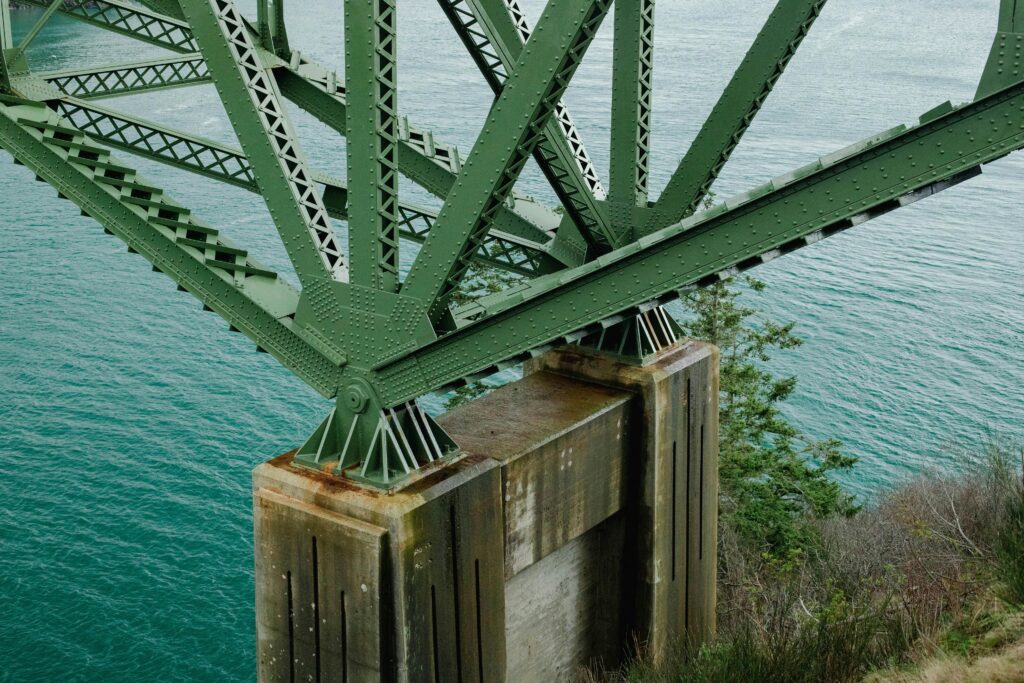
Photo by Makayla Asuncion: https://www.pexels.com/photo/green-steel-bridge-over-turquoise-water-in-nature-33894838/