Author: Ryan Zizzo, Founder & CEO, Mantle Climate
Over the next five years, we must build faster, better, stronger, greener, and more affordably. We predict the following five trends will be crucial to achieve these goals.
Trend #1: Circular Construction
The construction industry will accelerate its embrace of circularity – the “original” construction technique. Deconstruction and material salvage/reuse will become standard practice, with architects and designers increasingly specifying reclaimed materials in new builds.
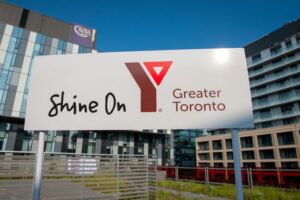
Adaptive reuse projects will become more commonplace as the multitude of benefits associated with circular construction becomes more widely recognized. The under-construction YMCA at Square One mall in Mississauga is a prime example. Set to open this year, it will see the existing Mississauga Y move from its current location to a refurbished space in Ontario’s largest shopping centre that has stood unused since before the pandemic. The project demonstrates how underutilized existing structures can be transformed and reimagined rather than demolished.
And when reuse isn’t possible, thoughtful deconstruction and material reuse will be increasingly prioritized, as demonstrated at the Mississauga Y. A key aim of the Mississauga Y project is to divert as much construction and demolition waste from landfill as possible. The deconstruction plan included a detailed cataloguing and matching of materials available in the existing site against those required in the new site. Materials were earmarked in descending order of priority: reuse at Square One, immediate use at other YMCAs, future use in other YMCAs (send to storage), sale or donation for reuse, recycling, and finally, landfill. These efforts are accelerating, with the City of Toronto launching a new Material Exchange Directory to promote material recovery in construction and demolition activities.
This circular approach doesn’t just reduce waste—it also minimizes embodied carbon, lowers costs for new materials, and shortens construction schedules when the materials are already at hand, all while creating unique, characterful spaces and preserving culturally and historically important building features. It also supports local jobs associated with deconstruction and reuse.
Still, challenges remain—at the design, logistical and policy levels. Circularity works best when it’s incorporated into every stage of a building’s lifecycle. Initial designs should allow for future adaptability and disassembly. We also need better policy, including improved enforcement of often overlooked existing laws on keeping valuable resources out of the landfill, and the creation of new policies around deconstruction, salvage, and reuse.
Trend #2: Low Embodied Carbon (and Local) Construction Materials
The materials we build with will change.
Forward-thinking companies like Steelcon, an Ontario-based structural steel fabricator, have already recognized this. Steelcon not only reduced the embodied carbon in their signature SIN Beam product, but the company also created a third-party verified environmental product declaration (EPD) to demonstrate the environmental attributes of their product to the market in a transparent and standardized way. In doing so, they turned a demand for lower embodied carbon steel into a competitive advantage.
The cement, concrete, and masonry industry continues to decarbonize, with lower-carbon mixes becoming the norm and cement plants finding new and innovative ways to slash emissions. This will continue and must accelerate. The design community must also double its efforts to use these incredible materials more sparingly, doing more with less. This focus on material efficiency is overdue and will have the co-benefit of reducing the cost of new construction by avoiding unnecessary material purchases.
Timber construction will reach new heights—literally—with more and taller wooden buildings proving both feasible and highly desirable. The industry will continue to accelerate the delivery of mass timber buildings now that the Ontario Building Code allows for these innovative designs to sore to up to 18 storeys as of right.
Even cladding, insulation, and paving materials are getting the low-carbon treatment. This trend is being accelerated by mounting pressure and regulatory requirements to decarbonize and report scope 3 and embodied emissions, pushing the entire supply chain toward transparency and decarbonization.
At the federal level, the Canadian government’s Standard on Embodied Carbon in Construction requires 10% reductions in embodied carbon from concrete and steel on federal projects and requires new federal buildings to be at least 30% lower in embodied carbon than typical construction. Further, in December 2025, the federal government announced its Buy Canadian Policy. By requiring defence and large federal construction projects to use more Canadian-produced concrete, steel, aluminum and wood products, embodied carbon from transport of materials is reduced while local jobs are supported.
Trend #3: Resilience Against Climate Physical Risk
Climate adaptation will get more attention. Currently, climate mitigation efforts grab most of the headlines, but this is a dangerous imbalance. As extreme weather events intensify, buildings must be designed with flood protection, wildfire-resistant materials, cooling systems, backup energy solutions, and more built in from the start. Resilience isn’t a nice-to-have anymore; it’s an essential requirement that protects both people and investments.
Increasing frequency and intensity of floods, extreme heat, wind, and power outages are disrupting buildings across Canada and will only get worse without strong adaptation action. These impacts affect not only safety and comfort, but also insurability, financing, operations, and long-term asset value. Over the next five years, we expect physical climate risk to become a standard consideration in site selection, design, and due diligence, much like seismic risk or life safety codes are today.
The first step is understanding climate risk exposure. Tools such as the Intact Centre on Climate Adaptation’s Municipal Flood Risk Check-Up demonstrate how structured assessments can identify vulnerabilities and guide action. While designed for municipalities, the same principles apply to individual buildings and portfolios: assess risk early, identify weak points, and prioritize interventions where they matter most. This kind of upfront analysis can prevent costly retrofits and operational disruptions later.
Design responses will increasingly follow. Strategies include elevated critical equipment, flood-resistant materials, passive response strategies, enhanced stormwater management, nature-based solutions like permeable paving and bioswales, and more. These measures not only reduce risk but also often improve building performance under normal conditions.
Resilience works best when it’s prioritized early at the concept and planning stages rather than added later. It is less expensive to revise a design instead of undertaking a costly retrofit in the future. Over the next five years, projects that fail to address physical climate risk will face growing scrutiny from insurers, lenders, and occupants, while resilience buildings stand out as safer, smarter long-term investments.
Trend #4: Data Centres as Catalysts for Positive Change
Data centre development will drive system-level innovation. Big tech cloud providers and other large data centre developers and operators are investing hundreds of billions of dollars into constructing data centres globally. Many of them have robust sustainability requirements for their design, construction and operation, including the use of low-carbon materials and 100% renewable energy. As this investment accelerates, data centres will play a much larger role in shaping energy systems, supply chains, and climate outcomes.
Canada is well-positioned to harness the coming wave of domestic data centre investment to kick-start the industrial innovation it craves. If done well, data centres can deliver benefits that extend far beyond their own walls. For example, low-carbon waste heat from data centres can be injected into district heating systems, decarbonizing nearby buildings while improving overall system efficiency.
Data centres could also act as powerful drivers of clean energy investment. Their scale and predictable demand make them ideal to invest in massive power purchase agreements to fund grid-scale off-site renewables. In doing so, they can help strengthen broad grid resilience and decarbonization efforts while meeting their own energy needs.
On the construction side, data centres could drive investment in low-carbon materials, including green Canadian-made concrete and steel, and locally grown sustainable timber, to decarbonize our supply chains and drive significant progress on embodied carbon reductions.
In this way, strong green construction standards on data centres can feed two birds with one scone—meeting the digital infrastructure needs of tomorrow while advancing climate goals today. Over the next five years, data centres that embrace this opportunity won’t just support the digital economy. They’ll help define what resilient, low-carbon development looks like at scale.
Trend #5: Net-Zero and Green Building Certifications
Industry-leading sustainability certifications will continue to evolve and provide value. The Zero Carbon Building Standard, LEED v5 (the first major update in over a decade), BOMA Best, and Green Globes have moved green building into the mainstream, and will continue to lead the way through new updated versions. LEED v5, for instance, now requires embodied carbon quantification (it was optional in previous versions) and places a stronger focus on resilience and decarbonization beyond just energy efficiency.
These certifications aren’t just plaques on the wall—they mean something. They deliver higher-quality buildings, lower life cycle costs, increased long-term value, and better energy security. The financial benefits can be substantial: building certifications can unlock a lower cost of capital from investors, leading to millions of dollars in savings.
Looking Ahead
At Mantle, one of our core mantras is that climate success leads to business success. These five trends will help organizations realize both.
The future of buildings is being written today, and those who embrace these opportunities will lead the industry toward a more sustainable, resilient, and prosperous built environment for tomorrow.
Interested in learning more about how Mantle Climate can help your project? Reach out to set up a chat.